
10 Actionable Content Repurposing Strategies That Work in 2025
Discover 10 powerful content repurposing strategies to maximize reach and engagement. This guide includes actionable examples and tips to amplify your content.
Feeling the pressure to constantly create new, high-quality content for every platform? You're not alone. The content creation treadmill is exhausting, but what if you could multiply your output without multiplying your effort? The secret lies in mastering content repurposing strategies. This isn't about lazy copy-pasting; it's a smart, strategic approach to transforming one high-value asset into a dozen platform-native variations that drive engagement, build authority, and maximize your ROI.
By viewing each core piece of content as a source of multiple smaller assets, you can maintain a consistent presence across channels without burning out. This method ensures your best ideas reach the widest possible audience in formats they prefer, whether it's a short-form video, an insightful carousel, or a detailed blog post. For a comprehensive look at various approaches, delve into additional actionable 10 Powerful Content Repurposing Strategies to Reignite Your Library in 2025 that can further ignite your content library.
In this guide, we'll break down 10 actionable, non-obvious strategies you can implement today. We will move beyond generic advice and provide practical examples, step-by-step workflows, and automation tips to turn your best content into a powerful, perpetual marketing engine. Get ready to amplify your reach and reclaim your time with a system that makes every piece of content work harder for you. We’ll explore everything from atomizing long-form videos and expanding carousels into content series to mining podcast transcriptions for gold.
1. Cross-Platform Content Adaptation
Cross-platform content adaptation is a foundational repurposing strategy that involves transforming a single "pillar" piece of content into multiple variations, each tailored to a specific social media platform. Instead of simply cross-posting the same file everywhere, this method respects the unique formats, audience expectations, and algorithmic preferences of each channel, maximizing reach and engagement. The core message remains consistent, but the delivery is meticulously customized.
This approach recognizes that a deep-dive YouTube video and a 15-second TikTok require different storytelling structures. For a tangible example, imagine a 20-minute YouTube video titled "How to Master Landscape Photography." This single asset can be adapted into:
LinkedIn: A text post sharing "3 Common Mistakes Landscape Photographers Make," with each mistake pulled from the video. Pair it with a high-resolution photo and a question to prompt discussion among professionals.
Instagram: A carousel post titled "5 Steps to the Perfect Sunset Photo." Each slide features a stunning image and a concise tip from the video, such as "Rule of Thirds" or "Golden Hour Settings."
TikTok/Reels: A fast-paced, 15-second video showing a "before and after" of an edited landscape photo, using a trending sound and on-screen text highlighting one key editing trick from the full video.
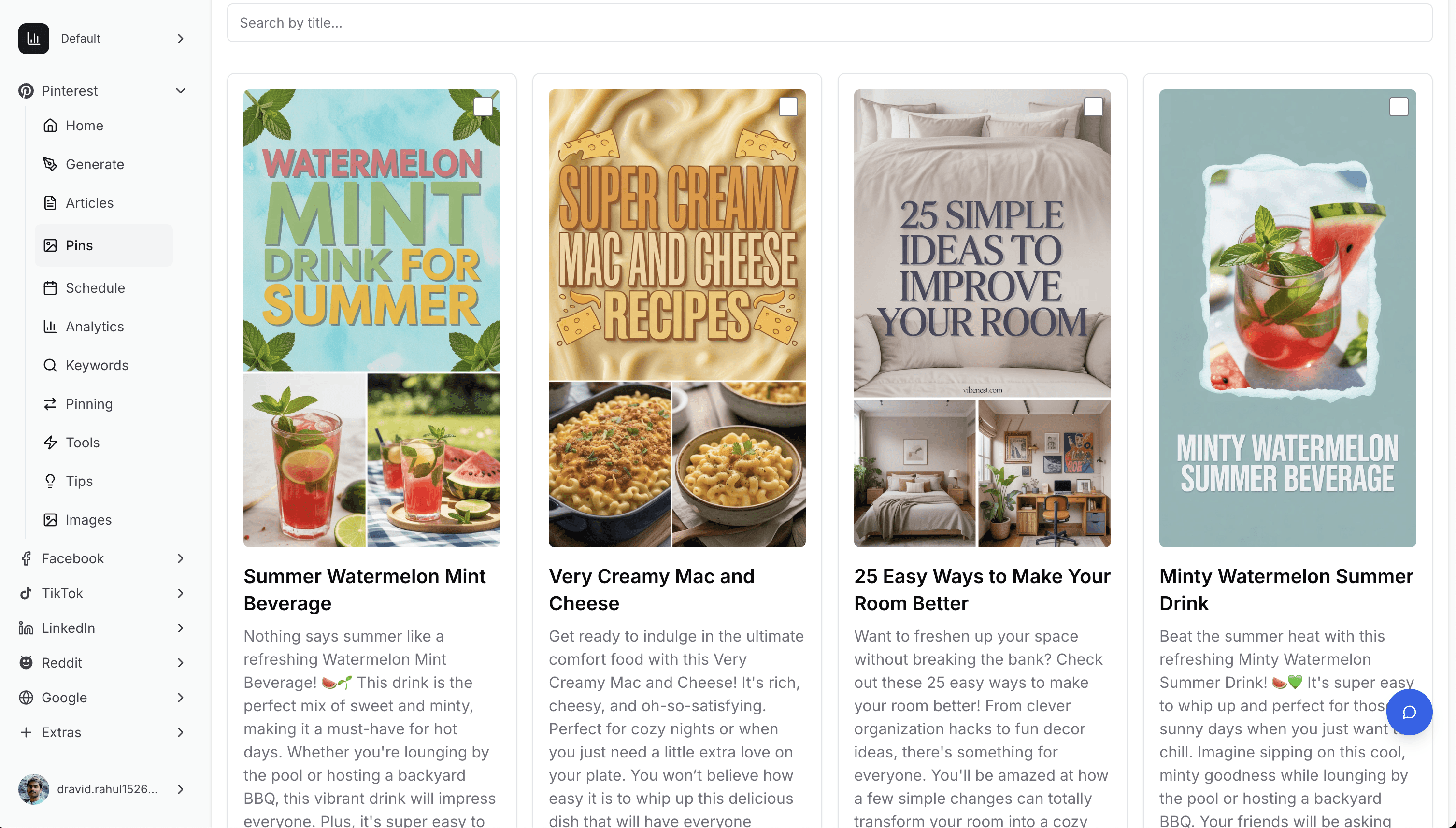
Pinterest: A tall, infographic-style Pin titled "Landscape Photography Cheat Sheet," summarizing camera settings (aperture, ISO, shutter speed) discussed in the video.
Actionable Implementation Steps
Identify a Pillar Asset: Choose a high-performing long-form piece of content, like a popular blog post or your most-viewed YouTube video. This is your "source material."
Create a Content Adaptation Map: For your chosen asset, create a simple spreadsheet. List your target platforms (LinkedIn, Instagram, TikTok) in rows and content ideas (key takeaways, quotes, stats, steps) in columns. This map is your blueprint.
Generate Platform-Native Assets: Use your map to create the content. For instance, pull a powerful statistic for a LinkedIn post and design a simple graphic for it. Trim a key segment from your video for a Reel.
Automate and Schedule: Use tools like NicheTrafficKit's AI to automatically generate platform-specific captions and hashtags. Schedule these adapted assets across your channels using a content calendar to manage multiple social media accounts efficiently. This systematic approach ensures your message resonates powerfully everywhere.
2. Content Atomization
Content atomization is one of the most powerful content repurposing strategies, focusing on deconstructing a single large "pillar" asset into numerous smaller, standalone "atoms" of micro-content. This process allows you to maximize the value of your core content by breaking it down into digestible pieces, each designed for a specific purpose or platform. Each atom can function independently to capture attention while also serving as a gateway to drive traffic back to the original, more comprehensive piece.
This strategy is about multiplying your output without multiplying your effort. For a practical example, a single 30-minute product webinar for a new software feature can be atomized into:
TikTok/Reels: Create 5-10 short video clips. Clip #1: A 15-second screen recording of the most "wow-factor" feature in action. Clip #2: A 20-second clip of the presenter sharing a surprising statistic.
Instagram: Design a 5-slide carousel post detailing a 3-step process discussed in the webinar. Create three separate quote graphics featuring powerful statements from the speaker. You can then amplify these by sharing the Instagram posts to your story.
LinkedIn: Write a text post summarizing "3 Key Takeaways for Project Managers" from the webinar, accompanied by a 60-second video clip of the most compelling segment.
Blog/Newsletter: Transcribe the Q&A session from the end of the webinar and turn it into a blog post titled "Your Top 5 Questions About Our New Feature, Answered."
Actionable Implementation Steps
Select Your Pillar Asset: Choose a high-value piece like a comprehensive guide, podcast episode, or long-form video.
Create an "Atomization Blueprint": Before or during editing, create a document where you timestamp and list all potential clips, quotes, data points, and key concepts that can be extracted. For a webinar, this might look like: "12:35 - Quote about productivity," "21:15 - Screen share of new feature."
Extract and Create: Use video editing software to clip the timestamped moments. Use a design tool like Canva with pre-made templates to quickly create quote graphics.
Catalog and Schedule: Save each created "atom" with a clear naming convention (e.g., "Webinar_Clip_01_ProductivityTip"). Use tools like NicheTrafficKit's AI to automatically identify and clip key moments. Schedule them across your content calendar for a steady stream of valuable micro-content.
3. Carousel-to-Series Content Expansion
Carousel-to-series content expansion is a powerful repurposing strategy that deconstructs a single, high-value carousel post into a cohesive series of individual posts. Instead of relying on one asset, this method treats each slide as a standalone piece of content, allowing you to dive deeper into each point. This multiplies your content output from a single idea, creating a sustained narrative that keeps your audience engaged over an extended period.
This technique is especially effective for educational or list-based content. For a practical example, a single 10-slide Instagram carousel on "10 Common SEO Mistakes" can be transformed into a two-week content series:
Day 1 (Monday): Post a Reel teasing the upcoming series, showing a quick montage of all 10 mistakes.
Day 2 (Tuesday): Post a detailed text-and-graphic post about "Mistake #1: Not Using Long-Tail Keywords," expanding on the original carousel slide with a specific example of a good vs. bad keyword.
Day 4 (Thursday): Post a short video explaining "Mistake #2: Ignoring Image ALT Text," with a quick screen recording showing how to add it.
Day 6 (Saturday): Post a simple graphic for "Mistake #3: Neglecting Mobile Optimization," with a shocking statistic about mobile traffic.
Actionable Implementation Steps
Identify a High-Performing Carousel: Look at your analytics and find a carousel post that had high engagement, especially saves and shares. This indicates the topic resonated deeply.
Plan Your Series Calendar: Map out the series over 1-2 weeks. Decide which point will be covered on which day and in what format (e.g., Monday: Video, Wednesday: Graphic, Friday: Text-post).
Add New Value to Each Post: For each new post, don't just copy the original slide. Expand on it. Add a new statistic, a personal anecdote, a client example, or a specific "how-to" tip that wasn't in the original carousel.
Create Continuity: Use a clear numbering system in your captions (e.g., "SEO Mistake 3/10") and a consistent visual style. In each post, remind followers to check back for the next tip, creating anticipation. This is one of the most efficient content repurposing strategies for maximizing the lifespan of your best ideas.
4. User-Generated Content (UGC) Amplification
User-Generated Content (UGC) amplification is one of the most powerful content repurposing strategies, transforming your audience from passive consumers into active content creation partners. This method involves systematically collecting, curating, and redistributing authentic content created by your customers, such as testimonials, reviews, social media mentions, and product photos. By amplifying their voices, you build powerful social proof and reduce the burden of constant in-house content creation.
This strategy leverages your community’s enthusiasm to create a self-sustaining content engine. For a practical example, a single positive customer tweet about your software can be repurposed into:

LinkedIn: A text post saying, "We love seeing how our customers like [Customer's Name] are using our tool to achieve [result]. Here's what they had to say:" followed by a screenshot of the tweet.
Instagram: A beautifully designed graphic with the tweet's text overlaid on a branded background. The caption could ask, "What's your favorite feature?" to encourage more engagement.
Website: Add a screenshot of the tweet to a dedicated "Wall of Love" or "Testimonials" section on your homepage.
Email Marketing: Include the tweet in your next newsletter under a "From the Community" section to provide social proof to your subscribers.
Actionable Implementation Steps
Establish a Collection System: Create a branded hashtag (e.g., #BrandInAction) and actively encourage its use. Use social listening tools to monitor your brand mentions, tags, and reviews across platforms.
Always Secure Permission: Before using someone's content, send them a direct message. A simple, "This is great! Do you mind if we share this on our social channels and credit you?" is usually sufficient and shows respect.
Organize and Curate: Create a central folder (e.g., in Google Drive or Dropbox) to store all approved UGC. Tag each piece of content by theme (e.g., "testimonial," "product-in-use") for easy access. To dive deeper, exploring various User Generated Content Strategies can provide a more structured approach.
Amplify and Credit: Use tools like NicheTrafficKit’s bulk creation tools to turn a dozen text reviews into a month's worth of scheduled testimonial graphics. When you post, always tag the original creator. This not only gives them credit but also encourages others to post for a chance to be featured.
5. Educational Series from Product Updates
This strategy transforms standard product updates and feature announcements into valuable, multi-part educational content series. Instead of a single, forgettable "What's New" post, this approach repositions each new feature as an opportunity to teach, empower, and demonstrate indispensable value. It shifts the focus from merely announcing a change to educating users on how that change can solve their problems and improve their workflows, thereby deepening product adoption and user loyalty.
This method turns a simple product enhancement into a compelling narrative. For a practical example, a software company launching a new "AI-powered reporting" feature can repurpose the announcement into a week-long educational series:
Day 1 (Launch Day): A blog post titled, "Introducing AI Reports: Turn Your Data into Decisions Instantly."
Day 2: A LinkedIn carousel showing a 3-step guide on "How to Generate Your First AI Report in 60 Seconds."
Day 3: A YouTube tutorial screen-recording a deep dive into "Customizing Your AI Reports for Maximum Impact."
Day 4: An email to users highlighting a specific use case, like "How Sales Teams Can Use AI Reports to Identify Top Leads."
Day 5: A short Reel/TikTok video showing a rapid "before and after" comparison: a confusing spreadsheet vs. a clean, insightful AI-generated report.
Actionable Implementation Steps
Align Content with Product Roadmap: Work with your product team to understand upcoming features well in advance. This gives you time to plan and create content before the launch.
Brainstorm User-Centric Angles: For each feature, ask "How does this help our user solve a problem?" instead of "What does this feature do?" A new design tool isn't just a "tool"; it's a "time-saver for e-commerce owners" or a "lead magnet creator for coaches." Frame your content around these benefits.
Batch-Create Your Assets: For each feature, create a "launch content kit" that includes a core tutorial video, a blog post, and social media clips. You can use NicheTrafficKit's AI to quickly generate scripts, tutorial breakdowns, and social media captions from a single product brief.
Launch and Link: Release the educational content simultaneously with the product update. Crucially, link to the relevant tutorial or blog post directly from the in-app announcement to drive immediate adoption. This is one of the most effective content repurposing strategies for turning product news into a powerful customer retention tool.
6. Trending Audio/Sound Repurposing
Trending audio repurposing is a highly effective, algorithm-driven strategy that involves identifying viral sounds or music and creating multiple unique video variations using that same trending audio. This approach leverages the significant algorithmic boost platforms like TikTok and Instagram Reels give to content using popular sounds. Instead of creating a single video, this method focuses on producing a batch of content around one audio trend, each with a different visual, narrative, or angle to maintain audience interest and maximize visibility.
This strategy is about capitalizing on a narrow window of opportunity. For a practical example, a real estate agent could use a single trending audio clip to create a diverse set of short-form videos:
Video 1 (Listing Tour): A quick montage of a new property listing, with cuts timed to the beat of the audio.
Video 2 (Educational Tip): A text-on-screen video sharing "3 Things to Look For During a Home Inspection," using the sound to make the tip more engaging.
Video 3 (Behind-the-Scenes): A humorous clip of the agent struggling to put a "For Sale" sign into hard ground, using a funny trending sound.
Video 4 (Myth Busting): A video with on-screen text like "Myth: You need a 20% down payment," with the agent shaking their head "no" to the beat.
Actionable Implementation Steps
Identify Trends Early: Actively scroll TikTok and Reels daily for 10-15 minutes, specifically looking for sounds that are being used frequently but aren't oversaturated yet. Use tools like NicheTrafficKit’s built-in TikTok trends feature to spot emerging sounds proactively.
Develop Replicable Formats: Create 3-5 content "templates" or formats that you can quickly adapt to any sound. These could include: "Point-of-view (POV)," "How-to/Tip," "Myth vs. Fact," or "Product Showcase."
Batch-Create and Film: When you find a relevant trending sound, film all 3-5 video concepts in one session. This is far more efficient than creating one video at a time.
Post in Quick Succession: Schedule the videos to post over 1-3 days. This creates a concentrated impact while the sound is at its peak popularity and increases your chances of one of them going viral. Remember to understand the nuances of how to add music to Instagram posts and stories to align with platform best practices.
7. FAQ-to-Content Database Strategy
The FAQ-to-Content Database strategy transforms your customer support channels into a perpetual source of high-value content. It involves mining frequently asked questions, support tickets, and sales objections to identify customer pain points, then systematically turning those queries into educational content. This proactive approach turns reactive support conversations into scalable assets that educate your audience and build trust.
This method directly addresses the real-world problems your audience faces. For a practical example, if a SaaS company constantly gets the support ticket, "How do I integrate your software with Salesforce?" they can turn this single question into a content goldmine:
YouTube: A 5-minute, step-by-step screen-share tutorial walking users through the entire Salesforce integration process.
Blog Post: A detailed guide titled "The Ultimate Guide to Integrating with Salesforce," including troubleshooting tips for common errors, optimized for SEO.
TikTok/Reels: A 30-second video showing "3 Clicks to Connect to Salesforce," perfect for quick, visual learners.
LinkedIn: An educational carousel post explaining "3 Ways Integrating with Salesforce Boosts Your Team's Productivity," targeting business decision-makers.
Actionable Implementation Steps
Mine Your Data: Collaborate with your customer support and sales teams. Set up a shared document or spreadsheet where they can log the top 5-10 most common questions they receive each month.
Prioritize and Plan: Review the list of questions and prioritize them based on frequency and their relevance to your ideal customer. For each high-priority question, map out which content formats would be most helpful (e.g., a complex issue needs a video, a simple one needs a graphic).
Create and Distribute: Systematically create the content for each FAQ. Use tools like NicheTrafficKit's bulk creation feature to efficiently generate dozens of social media variations from a single answer.
Close the Loop: Share these new content assets with your support and sales teams. They can now respond to inquiries with a link to a helpful blog post or video tutorial, reducing their workload and providing a better customer experience.
8. Client Results Case Study Disaggregation
Client results case study disaggregation is a powerful B2B content repurposing strategy that involves deconstructing a single, comprehensive success story into dozens of micro-content assets. Instead of publishing one monolithic case study and hoping it gets read, this method atomizes its core components-like key metrics, client quotes, challenges, and solutions-into standalone pieces. Each piece is then tailored for different platforms and audiences, telling the same success story from multiple compelling angles.
This approach transforms a static 10-page document into a dynamic, multi-channel campaign. For a practical example, a marketing agency's detailed case study on "How We Increased a Client's MRR by 200%" can be broken down into:
LinkedIn: A carousel post detailing the "3-Step Strategy We Used to Double a Client's Revenue," with each slide focusing on a specific action and its outcome.
Company Blog: A post framed as a story: "From Stagnation to 200% Growth: The Journey of [Client Name]," offering a behind-the-scenes perspective.
Instagram/Facebook: A series of sleek quote graphics featuring the client's most impactful testimonial (e.g., "Working with them was a game-changer for our business.").
Short-Form Video (Reels/TikTok): A quick, data-driven video showing an animated graph of the client's revenue growth, with bold text highlighting the "200% increase" metric.
Email to Prospects: A targeted email sharing just the "Challenge" and "Solution" sections of the case study, with a call-to-action to download the full report.
Actionable Implementation Steps
Dissect the Case Study: Open your case study document and copy/paste its core components into a new file: The Client's Problem, Our Solution (broken into steps), Key Results (specific numbers), and Client Quotes. These are your building blocks.
Map Components to Platforms: For each building block, decide the best format and platform. The "Key Results" are perfect for a visual Reel. The "Solution Steps" are ideal for a LinkedIn carousel. The "Client Quote" is perfect for a static Instagram graphic.
Create Micro-Content: Use your map to create the assets. Use NicheTrafficKit's carousel builder to quickly design a visually engaging breakdown of the project timeline or results.
Schedule as a Campaign: Don't post everything at once. Schedule these assets as a "Client Success" series over two weeks. Crucially, in the caption of each micro-post, include a link back to the full case study on your website to capture high-intent leads.
9. Podcast/Video Transcription Mining
Podcast/Video transcription mining is one of the most efficient content repurposing strategies for extracting maximum value from your audio and video assets. This technique involves converting the spoken words from podcasts, webinars, or interviews into a written transcript, which then serves as a rich source for creating dozens of new content pieces. It systematically deconstructs a single long-form recording into a library of derivative assets, ensuring no valuable insight is left behind.
The power of this method lies in its scalability. A single 60-minute interview can be meticulously mined to produce:
Blog Post: A "Top 5 Takeaways from My Conversation with [Guest Name]" article, optimized for SEO with relevant keywords.
Quote Graphics: 5-7 visually appealing graphics featuring the most powerful, concise quotes from the guest, perfect for Instagram and LinkedIn.
Social Media Threads: A multi-part Twitter or LinkedIn thread breaking down a core concept discussed in the recording. For example: "Here's the 4-step framework for success that [Guest Name] shared on my podcast:"
Email Newsletter: An exclusive summary of "3 insights you missed" from the episode, sent directly to your subscriber list to drive traffic to the full recording.
Short-Form Videos: Clip the 3-4 most impactful 30-60 second moments from the video version, add captions directly from the transcript, and post them on TikTok and Reels.
Actionable Implementation Steps
Generate a Transcript: Use an automated service like Otter.ai or Rev to get a written transcript of your audio or video file quickly and accurately.
Highlight and Timestamp: Read through the transcript and highlight key moments: powerful statements, data points, actionable tips, or funny anecdotes. As you do, note the corresponding timestamp from the recording (e.g., "Great quote at 15:32").
Identify Core Themes: Look for 3-5 core themes or topics within the conversation. Use these as pillars for separate content pieces. One theme can become a blog post, while another can be a LinkedIn carousel.
Automate Creation: Feed a highlighted section of the transcript into NicheTrafficKit’s AI. It can instantly generate platform-specific social media posts, captions, and summaries from that text. This transforms a time-consuming manual task into a streamlined workflow, ensuring every piece of repurposed content drives engagement.
10. Seasonal and Evergreen Content Rotation
Seasonal and evergreen content rotation is a strategic approach that involves reviving your proven, high-performing content at optimal intervals. Instead of letting your best work fade away, this method systematically reintroduces it with fresh updates to visuals, hooks, and calls-to-action. The core message that already resonated with your audience remains, but its presentation is modernized to maximize impact and reach new followers without creating fatigue.
This powerful content repurposing strategy acknowledges that not everyone saw your best content the first time. For a practical example, a financial advisor can rotate their content like this:
Quarterly: Relaunch a top-performing LinkedIn post about "Retirement Planning Basics" but update it with the latest market statistics and a new introductory hook.
Annually: Every January, repost a popular "Financial Resolutions" video from last year, but re-film the intro to mention the current year and update any links in the description.
Monthly: Re-share an evergreen Instagram carousel about "Budgeting Tips." In May, frame the caption around "Budgeting for Summer Vacation." In November, frame it around "Budgeting for Holiday Shopping."
Seasonally: Every March, bring back a series of TikTok videos about "Tax Prep Tips," updated with the current year's deadlines and trending audio.
Actionable Implementation Steps
Identify Your Top Performers: Use your platform analytics to identify your top 10-20% of posts based on engagement (likes, comments, shares) and reach. Tag these posts as "Evergreen Gold" in a spreadsheet.
Build a Rotation Calendar: Create a simple content calendar dedicated to repurposing. Schedule your "Evergreen Gold" posts to be reshared every 3-6 months. Map out your seasonal content around predictable events (e.g., holidays, seasons, industry events).
Create a "Refresh Checklist": For each piece of content you plan to rotate, create a simple checklist: [ ] Update statistics/data. [ ] Create a new graphic/thumbnail. [ ] Write three new opening hooks for the caption. [ ] Change the call-to-action. This ensures the content feels fresh.
Track and Optimize: Use NicheTrafficKit's analytics to quickly identify your top performers, streamlining the selection process. After reposting, compare the new performance to the original. This data will show you which "refreshes" work best for your audience.
Content Repurposing: 10-Strategy Comparison
Method | 🔄 Implementation Complexity | ⚡ Resource Requirements | ⭐ Expected Outcomes | 📊 Ideal Use Cases | 💡 Key Advantages |
|---|---|---|---|---|---|
Cross-Platform Content Adaptation | Medium–High: requires platform-specific formats and algorithm knowledge | Moderate: repurposing tools, design assets, scheduling | ⭐ Broader reach, higher cross-channel engagement | Creators/agencies managing multiple platforms | Maximizes ROI, maintains brand consistency, targets multiple journey stages |
Content Atomization | Medium: needs upfront blueprint and hierarchical planning | Moderate–High: editing, clipping, cataloging tools, templates | ⭐ Large volume of outputs, improved SEO and repeat touchpoints | Long-form creators (podcasts, webinars, long videos) | Multiplies content from one asset, serves varied consumption preferences |
Carousel-to-Series Content Expansion | Low–Medium: expand slides into standalone, sequenced posts | Low–Moderate: visual variations, copy expansion, scheduling | ⭐ Extended content lifespan, sequential audience engagement | Pinterest, Instagram, LinkedIn creators | Deepens topic exploration, fills calendar with coherent series |
User-Generated Content (UGC) Amplification | Medium: requires collection, permission, and curation workflows | Low production; moderate curation & legal/process overhead | ⭐ Authentic social proof, higher engagement with lower content cost | E‑commerce, consumer brands, community-focused businesses | Cost-efficient content creation, builds trust and community loyalty |
Educational Series from Product Updates | Medium–High: needs product-marketing alignment and planning | Moderate: product experts, tutorial production, assets | ⭐ Higher product adoption, reduced support requests, thought leadership | SaaS and tools with frequent feature releases | Demonstrates value, accelerates adoption, creates multi-format educational content |
Trending Audio/Sound Repurposing | Low: simple technically but highly time-sensitive | Low: rapid editing, templates, trend-tracking tools | ⭐ Short-term spikes in discoverability and engagement | TikTok, Instagram Reels, YouTube Shorts creators | Leverages algorithmic favoritism, enables fast, repeatable content production |
FAQ-to-Content Database Strategy | Medium: requires support data mining and prioritization | Moderate: access to support data, writers, SEO optimization | ⭐ Fewer support tickets, targeted organic search traffic | SaaS, e‑commerce, service businesses with active support | Turns real customer questions into scalable education and SEO assets |
Client Results Case Study Disaggregation | Medium: needs permissions, narrative planning, context preservation | Moderate: design, metric visualization, testimonial editing | ⭐ Strong social proof across channels, improved lead nurturing | B2B, agencies, service providers with case studies | Extends case study ROI, provides multiple targeted proof points |
Podcast/Video Transcription Mining | Low–Medium: transcription plus editorial quality control | Moderate: transcription services, editors, clipping tools | ⭐ Many derivative assets, better SEO and discoverability | Podcasters, YouTubers, webinar hosts | Extracts quotable insights, creates multi-format content from one recording |
Seasonal and Evergreen Content Rotation | Low–Medium: requires performance tracking and timing strategy | Low: analytics and scheduling tools | ⭐ Sustained engagement, reduced need for constant new content | All creators wanting sustainable content strategies | Recycles proven performers, optimizes timing and messaging for longevity |
From Strategy to System: Automating Your Content Engine
You now have ten powerful, actionable content repurposing strategies in your arsenal. We’ve moved beyond the generic advice of “turn a blog post into a tweet” and into a nuanced, multi-platform approach. From atomizing long-form video into dozens of micro-assets to transforming client case studies into a continuous stream of social proof, the potential to amplify your core message is immense.
The true value of these methods isn't found in a one-off attempt. It's realized when they become an integrated part of your marketing operations. The goal is to stop thinking in terms of single content pieces and start architecting a content ecosystem where every asset has a purpose and a path to reinvention. This shift from a linear production line to a cyclical, interconnected system is what separates brands with fleeting visibility from those with sustained, omnipresent authority.
Synthesizing Your Repurposing Blueprint
Let's distill the core principles from the strategies we've covered into a clear, actionable framework. Mastering these concepts is the key to unlocking exponential reach without exponential effort.
The Power of the 'Pillar': Nearly every effective strategy begins with a substantial, high-value "pillar" piece. Whether it's a deep-dive podcast, a comprehensive webinar, or a detailed case study, this core asset is the wellspring from which all other content flows. Your first step is to identify or create these pillars.
Context is Non-Negotiable: Simply cross-posting is a failing strategy. As we saw with adapting content for different platforms, each channel has its own language, format, and audience expectation. Turning a podcast clip into a Reel requires not just trimming but adding visual text hooks, captions, and leveraging trending audio for maximum impact.
Audience-Driven Adaptation: The most successful repurposing is not about you; it's about your audience. The FAQ-to-Content Database strategy is a prime example of this. By listening to your audience's questions, you create a feedback loop that directly informs the creation and adaptation of your most valuable educational content.
Velocity Through Fragmentation: Your ability to maintain a high-volume, high-quality posting schedule depends on atomization. A single 30-minute client interview doesn't have to be one video. It can be five key insight clips for Reels, ten powerful quote graphics for LinkedIn carousels, and an audio-only version for a podcast feed. This fragmentation is your key to scaling.
Moving from Manual Effort to Automated Engine
Executing these content repurposing strategies manually is a path to certain burnout. Imagine trying to track the performance of 50 different content variations across four platforms each week. It's unsustainable. The ultimate goal is to build an intelligent system that automates the busywork, allowing you to focus on high-level strategy and creating the pillar content that fuels the entire machine.
This is where you operationalize your workflow. You don't just "turn a video into a carousel." You create a Standard Operating Procedure (SOP) that outlines:
Identify: The timestamps of key moments in the video.
Extract: Pull the video clips and the direct quotes.
Design: Use a predefined template in Canva to create the carousel slides.
Write: Generate captions tailored for both Instagram and LinkedIn.
Schedule: Load all assets into a scheduler for staggered release.
By systemizing this process, you create a predictable content engine. This is the final and most crucial step in turning these individual tactics into a cohesive, powerful, and sustainable growth strategy. The aim is to make content repurposing a background process that consistently drives traffic, engagement, and leads without demanding your constant, direct attention.
Ready to turn these advanced content repurposing strategies from a manual checklist into an automated growth engine? NicheTrafficKit uses AI to identify the best repurposing opportunities in your existing content, generates platform-specific assets, and automates your scheduling. Stop spending hours on adaptation and start building a system that works for you at NicheTrafficKit.