10 Actionable Social Media Best Practices to Implement in 2026
Discover 10 actionable social media best practices for 2026. This guide offers practical examples and expert tips to boost your engagement and growth.
The social media ecosystem is no longer a simple feed of updates. It's a complex environment where visibility, engagement, and growth depend entirely on a strategic, data-informed approach. Generic advice like "post consistently" or "be authentic" is no longer sufficient to break through the noise in 2026. To truly stand out, you need a set of proven, actionable social media best practices that move beyond the obvious and deliver measurable results.
This roundup is designed to provide just that. We've compiled 10 powerful strategies that blend creativity with data-driven precision, giving you a clear blueprint for success. Each practice is broken down with practical examples, actionable tips, and direct implementation guidance, showing you not just what to do, but exactly how to do it. You’ll learn how to repurpose content efficiently across platforms, leverage viral trends without feeling inauthentic, build a fiercely loyal community, and optimize every post for each platform's unique algorithm. For a deeper dive into the fundamental principles that support these advanced tactics, consider exploring these Top Social Media Marketing Best practices.
Whether you are a creator building a personal brand, a small business driving sales, or an agency managing multiple client accounts, these principles will form the foundation of a social strategy that doesn't just post, but performs. Let's get started.
1. Multi-Platform Content Repurposing and Adaptation
One of the most effective social media best practices for maximizing impact while minimizing effort is content repurposing. This strategy involves taking a single, comprehensive piece of "pillar" content, such as a blog post or a long-form video, and atomizing it into multiple smaller assets tailored for different social media platforms. Instead of creating unique content from scratch for each channel, you adapt a core message for various formats, audience expectations, and platform algorithms. This ensures brand consistency and significantly boosts your content's reach and lifespan.

This method, popularized by figures like Gary Vaynerchuk, allows you to turn one hour of work into a week's worth of diverse posts. For example, a 30-minute podcast episode can become:
YouTube: The full video recording of the interview.
Instagram Reels/TikTok: Three 60-second clips of the most powerful insights.
LinkedIn: A text post summarizing a key business takeaway, accompanied by a compelling quote graphic.
X (formerly Twitter): A thread of 5-7 tweets breaking down the main arguments.
Instagram Carousel: A 5-slide carousel explaining one core concept discussed in the episode.
How to Implement Content Repurposing
The key is to maintain your core message while adapting the delivery. A formal, data-driven tone on LinkedIn might become a casual, visually-driven carousel on Instagram.
Start with Pillar Content: Identify a high-value, long-form asset like a webinar, case study, or in-depth blog post. Your pillar content should be rich with information that can be easily broken down.
Extract Key Ideas: Pull out the most impactful statistics, quotes, tips, and concepts from your pillar content. Think in terms of "soundbites" or standalone points.
Adapt for Each Platform: Convert these key ideas into platform-native formats. Actionable example: Turn a list of "5 marketing tips" from your blog post into a quick-cut Instagram Reel pointing to text on screen for each tip. Create a professional-looking carousel for LinkedIn that explains each tip in more detail.
Track and Optimize: Use analytics to see which repurposed assets perform best. This data will inform your future content strategy, helping you double down on what resonates. For a deeper dive into these tactics, you can explore these detailed content repurposing strategies.
2. Data-Driven Content Strategy and Analytics Tracking
Moving beyond intuition and trends, one of the most critical social media best practices is adopting a data-driven content strategy. This approach involves leveraging analytics and performance metrics to make informed decisions about what you create, post, and promote. By systematically tracking engagement rates, audience demographics, and conversion metrics, you can identify precisely which content formats, topics, and posting times resonate most with your audience. This eliminates guesswork and ensures your efforts are aligned with achieving tangible business goals.
This methodology shifts social media from a creative outlet to a predictable growth engine. For instance, a software company might analyze its LinkedIn data and discover:
Posts with customer success stories (tagged as "case study") have a 3x higher click-through rate to their website than posts about company culture.
Short video demos (under 90 seconds) receive 50% more shares than static images of the user interface. As a result, they can confidently decide to produce more customer stories and video demos, knowing these formats drive real business results.
How to Implement a Data-Driven Strategy
The goal is to create a feedback loop where performance data from past content directly informs future content creation. This ensures continuous improvement and optimization.
Establish Clear KPIs: Before you track anything, define what success looks like. Actionable example: If your goal is lead generation, your primary KPI is "form fills from social traffic," not just "likes." Use UTM parameters in your links to track this accurately.
Focus on Meaningful Metrics: Move beyond vanity metrics. Track engagement rate (likes + comments + shares / followers) to measure content quality. Monitor saves on Instagram, as this indicates high-value content your audience wants to revisit.
Tag and Analyze Content: Systematically tag each post with its format (e.g., video, carousel, single image), topic pillar (e.g., "Productivity Tips," "Behind the Scenes"), and campaign. Use a simple spreadsheet or a social media tool to find patterns. You might discover that "Productivity Tips" carousels get the most saves.
Conduct Regular Reviews: Set aside one hour every Monday to review your analytics dashboard. Identify your top-performing post and your worst-performing post from the previous week. Ask why one worked and the other didn't, then apply that insight to this week's content plan.
3. Consistent Posting Schedule and Optimal Timing
Beyond what you post, when and how often you post are critical factors for success. This social media best practice involves two interconnected parts: maintaining a regular publishing frequency to keep your audience engaged and your brand top-of-mind, and publishing content at strategic times when your target audience is most active. Algorithms on platforms like Instagram and LinkedIn favor accounts with consistent, reliable posting patterns, as it signals you are an active and valuable contributor to their ecosystem.
This approach moves content strategy from random acts of posting to a deliberate, data-driven discipline. For example, a B2B SaaS company might discover their ideal LinkedIn schedule is posting at 9 AM ET on Tuesdays and Thursdays. This catches professionals in North America as they start their workday. In contrast, a D2C fashion brand might find their peak engagement on Instagram Reels is at 7 PM on weekdays and 2 PM on weekends, aligning with their audience's leisure time.
How to Implement a Consistent and Timely Schedule
The goal is to align your posting cadence with user behavior and platform algorithms. This requires a combination of analytics, testing, and automation.
Analyze Native Insights: Go to your Instagram "Professional Dashboard" > "Total Followers" > scroll to the bottom to "Most Active Times." This built-in tool shows you the exact hours and days your specific audience is online. This is your most reliable starting point.
Establish a Realistic Cadence: Determine a posting frequency you can maintain without sacrificing quality. Actionable insight: It's better to post 3 high-quality posts per week, every week, than to post 7 times one week and zero the next. Consistency trumps volume.
Test and Refine: Dedicate one month to testing different time slots. Example: If your insights say your audience is active from 6 PM to 9 PM, test posting at 6:30 PM in week one, 7:30 PM in week two, and 8:30 PM in week three. Compare the engagement rates within the first two hours of posting to find your sweet spot.
Use Scheduling Tools: Leverage tools like Buffer, Later, or Sprout Social to batch-create your content and schedule it in advance. This ensures you maintain a consistent presence and frees you from the pressure of daily posting. For a comprehensive guide, you can find more on the best times to post on social media.
4. Viral Trend Research and Timely Content Creation
One of the most powerful social media best practices is leveraging the ephemeral nature of online trends. This strategy involves actively monitoring trending topics, sounds, formats, and challenges across platforms and rapidly creating content that taps into their momentum. Social media operates on accelerated timelines where trends can peak and fade within days, so timely participation is crucial. By aligning content with emerging trends, brands can significantly boost visibility, reach, and algorithmic favor, especially on platforms like TikTok and Instagram Reels where trend-aware content is heavily rewarded.

This approach was heavily popularized by TikTok's algorithm and has been masterfully executed by brands like Duolingo, which built a massive following by personifying its mascot in viral video formats. A practical example: When the "Little Miss" meme trended, brands like Starbucks quickly created their own versions ("Little Miss drinks an iced coffee in 40-degree weather"), generating massive engagement by being relevant and relatable in the moment.
How to Implement Trend-Based Content
Success requires a balance of speed and brand alignment. Jumping on a trend that doesn't fit your brand's voice can feel inauthentic and backfire. The goal is to adapt the trend to your message, not the other way around.
Establish a Monitoring System: Dedicate 15 minutes each morning to scrolling TikTok's "For You" page and Instagram's Reels tab. Pay attention to sounds and video formats that appear repeatedly. Use the platform's search bar to see how many videos have been made with a specific sound—if it's growing fast but not yet oversaturated, it's a good candidate.
Prioritize Brand Alignment: Before creating, ask: "Can we connect this trend to our product, service, or industry in a clever way?" Example: A project management software company could use a trending audio about chaos to show the "before" of using their tool, and the "after" with a sense of calm and order. This is a natural fit.
Create with Agility: Don't aim for perfection. Use your smartphone to film and edit directly within the app (TikTok or Instagram) to reduce production time. Authenticity and speed are more important than cinematic quality for trend-based content.
Combine Trends with Core Messaging: Use a trending audio clip or format to communicate an evergreen brand message. Example: A skincare brand can use a popular "get ready with me" sound to showcase its morning routine products. This connects fleeting relevance with lasting value.
5. Authentic Audience Engagement and Community Building
One of the most crucial social media best practices is shifting from a one-way broadcast mindset to active, two-way conversation. Authentic engagement involves more than just posting content; it's about building a genuine community by responding to comments, participating in conversations, and making your audience feel seen and valued. This approach transforms passive followers into loyal brand advocates and provides invaluable market research. It also sends powerful signals to platform algorithms that your content is generating meaningful interaction, boosting its visibility.
Brands like Glossier built their empire on this principle, using Instagram comments and DMs to co-create products with their community. A practical example of this is a creator asking "What's your biggest struggle with [topic]?" in an Instagram Story. They can then reply to each DM individually, creating a personal connection, and use the responses as ideas for their next 10 content pieces, ensuring they're addressing real audience pain points.
How to Implement Authentic Engagement
The goal is to foster a space where your audience feels comfortable and encouraged to interact. This requires consistent effort and a genuine interest in what your followers have to say.
Be Responsive and Timely: Aim to respond to comments within the first hour of posting. This "golden hour" is when platforms like Instagram give posts the most algorithmic visibility. A quick response can trigger more conversation, further boosting your post.
Spark Conversations: End your captions with specific, low-effort questions. Instead of "What do you think?", ask "Which tip was your favorite, 1, 2, or 3?" This is easier to answer and encourages more comments.
Showcase Your Community: Actively share user-generated content (with credit). Actionable step: Create a dedicated Instagram Story Highlight called "Community" or "Reviews" where you permanently feature tagged posts and positive feedback from your audience. This encourages others to tag you.
Vary Your Responses: Avoid generic replies like "Thanks!" Ask a follow-up question. Example: If someone comments, "Great advice!", respond with, "So glad you found it helpful! Are you planning to try any of these tips this week?" This turns a simple comment into a real conversation. You can find more actionable tips in these guides on how to increase social media engagement.
6. Platform-Specific Content Optimization and Native Features
One of the most critical social media best practices is to abandon the "one-size-fits-all" approach and instead optimize content for each platform's unique algorithm, culture, and user expectations. This means creating content specifically designed for the environment where it will live, rather than cross-posting the exact same message everywhere. Each platform has a distinct purpose: LinkedIn prioritizes professional insights, TikTok rewards entertaining short-form video, and Pinterest thrives on visual discovery. Tailoring your content to these nuances dramatically increases its reach and engagement.
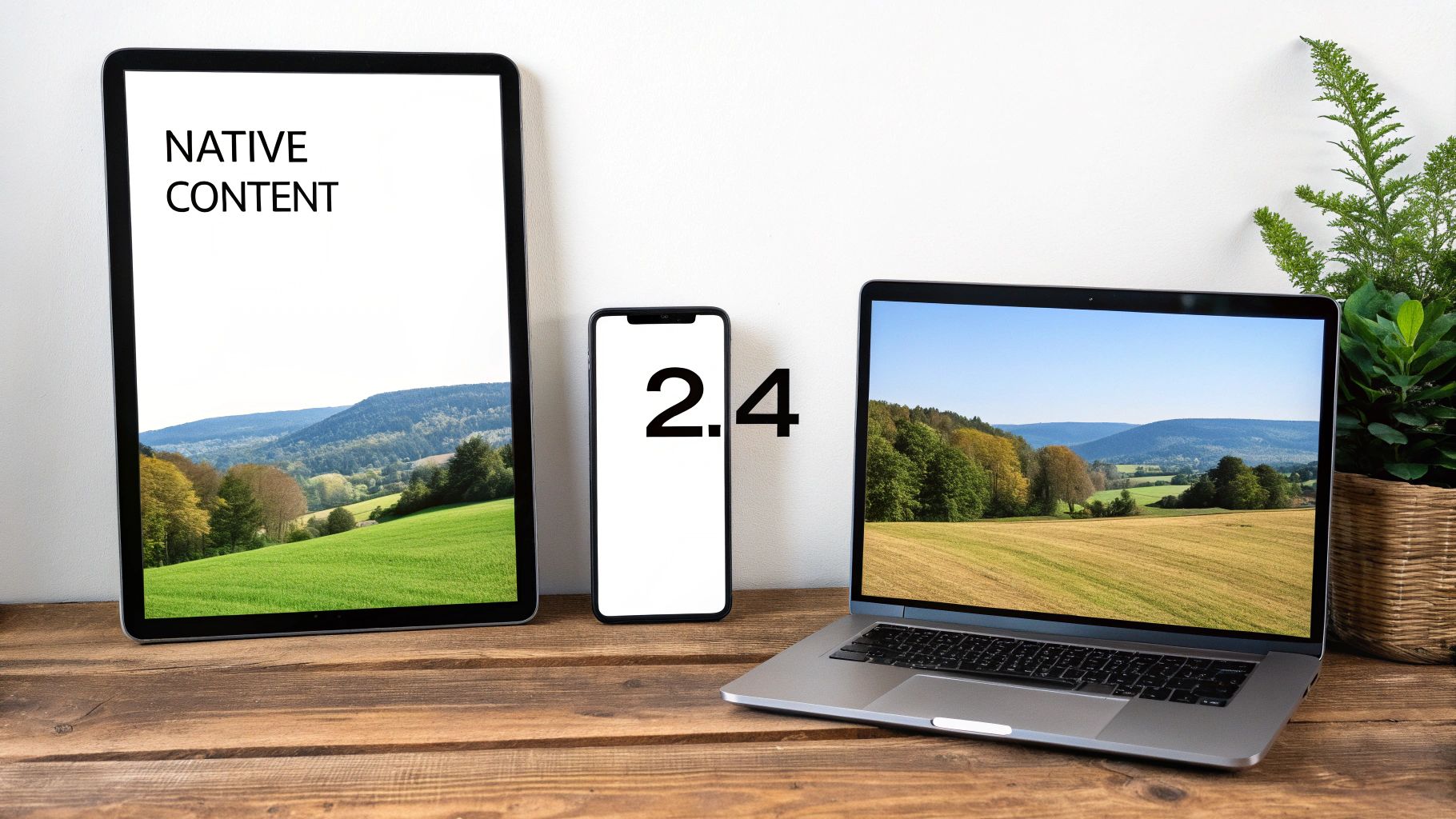
This strategy is not about creating more work; it’s about making your work more effective. A LinkedIn text post about industry trends will perform better than a link to an Instagram Reel on the same topic. Similarly, a fast-paced, trend-driven video will excel on TikTok but may feel out of place on a more polished YouTube channel. For creators focusing on short-form video, understanding the nuances of platforms like YouTube is crucial, and mastering YouTube Shorts best practices can lead to viral reach and sustained engagement.
How to Implement Platform-Specific Optimization
The goal is to speak the native language of each platform. A professional tone with in-depth analysis works on LinkedIn, while a casual, visually-driven carousel tells a better story on Instagram.
Research Platform Norms: Spend 20 minutes analyzing top-performing content in your niche on each channel. Actionable example: On LinkedIn, you might notice that text-only posts with strategic line breaks for readability perform exceptionally well. On Instagram, you'll see that Reels with on-screen text captions are standard because many users watch with the sound off.
Adapt Your Tone and Format: Match the platform's culture. Example: Post a polished, professional headshot on LinkedIn. Post a candid, behind-the-scenes photo from the same photoshoot on your Instagram Stories to show more personality.
Leverage Native Features: Go beyond just posting. Practical application: Use Instagram's "Add Yours" sticker in your Stories to create a viral chain of user-generated content. On LinkedIn, use the "Poll" feature to ask a thought-provoking industry question and drive engagement. Algorithms often reward the use of their newest features.
Optimize for Search and Discovery: Tailor your captions and hashtags for each platform's search system. On Pinterest, write a detailed, keyword-rich description as if you were writing a blog post. On Instagram, use 3-5 highly relevant keywords in your caption and add a mix of 10-15 broad and niche hashtags in the first comment.
7. Strategic Hashtag Research and SEO Optimization
Hashtags and social SEO are the engines of organic discovery on most social platforms. Unlike traditional search engines, social media algorithms heavily rely on hashtags, keywords in captions, and user search behavior to categorize content and serve it to relevant audiences. A well-researched hashtag strategy is one of the most critical social media best practices for increasing visibility beyond your existing followers and tapping into new, interested communities.
This practice involves more than just adding popular tags. It's about creating a strategic mix of high-volume, trending hashtags with niche, community-specific tags to maximize both broad reach and targeted engagement. For example, a graphic designer in New York might use:
Broad:
#graphicdesign(20M+ posts) for wide exposure.Niche:
#logodesigner(5M+ posts) to attract a more specific audience.Community/Location:
#nycdesigner(50K+ posts) to connect with local clients and peers.
How to Implement Hashtag and SEO Strategy
The goal is to signal to the algorithm exactly what your content is about and who it's for. This requires a balanced approach and consistent performance tracking.
Create a Hashtag Mix: Build "hashtag sets" in a note-taking app. For each content pillar, create a group of 15-20 hashtags that includes broad, niche, and community tags. This allows you to quickly copy and paste relevant tags instead of searching for them every time you post.
Optimize Your Captions and Profile: Treat your Instagram name field and bio as prime SEO real estate. Actionable step: Change your Instagram name from "Jane Doe" to "Jane Doe | Business Coach." This makes your profile discoverable when people search for "business coach." Weave relevant keywords naturally into your bio and captions.
Create a Branded Hashtag: Develop a unique hashtag for your brand (e.g.,
#YourBrandCommunity). Practical use: Put this hashtag directly in your bio with a call to action like "Share your wins using #YourBrandCommunity to be featured!" This actively encourages its use.Analyze and Adapt: On Instagram, check your post insights. Under "Reach," you can see how many impressions came from hashtags. If this number is low, your hashtags are either too competitive or not relevant enough. Test new sets on your next posts and track the difference. To learn more about advanced hashtag research tools, you can explore platforms like Hashtagify.
8. Carousel and Multi-Post Content Strategy
In a world of fleeting attention spans, one of the most powerful social media best practices is to tell a more complete story using multi-post formats. This strategy involves creating content like carousels on Instagram and LinkedIn or threads on X (formerly Twitter) that guide users through a narrative or a set of ideas across multiple slides or posts. This format is designed to increase user engagement and time spent on your content, both of which are critical signals that algorithms favor heavily.
Unlike a single image or video, a carousel requires active participation from the user in the form of a swipe or click. This simple action significantly boosts engagement metrics. A practical example: A fitness coach can create a 7-slide Instagram carousel titled "The Only 5 Exercises You Need for a Full Body Workout." Each slide demonstrates one exercise with clear instructions, and the final slide is a summary graphic that encourages users to "Save this post for your next gym session."
How to Implement a Multi-Post Content Strategy
The goal is to create a cohesive narrative that rewards the user for swiping to the end. Each slide or post should build on the last, culminating in a valuable takeaway or a clear call to action.
Create a Compelling Hook: The first slide must stop the scroll. Use a bold headline like "3 Myths About [Your Topic] Debunked" or "Steal My Formula for [Desired Outcome]." Use a striking visual and large, easy-to-read font.
Tell a Cohesive Story: Structure your carousel logically. Actionable framework:
Slide 1: Title/Hook
Slide 2: The Problem/Myth
Slides 3-5: The Solution/Tips
Slide 6: Summary/Key Takeaway
Slide 7: Call to Action (e.g., "Comment your biggest takeaway!")
Maintain Visual Consistency: Use a template (e.g., from Canva) with your brand's fonts and colors for all your carousels. This makes your content instantly recognizable in the feed and builds brand cohesion.
End with a Strong CTA: The final slide must tell the user exactly what to do next. Be direct. Use phrases like: "Save this post for later," "Share this with a friend who needs it," or "Follow me for more daily tips."
Key Insight: Carousel content fundamentally changes user behavior from passive consumption to active participation. By requiring a swipe, you increase 'time on post' and signal high engagement to platform algorithms, leading to greater organic reach and a more memorable brand interaction.
9. Influencer Collaboration and Micro-Influencer Partnerships
One of the most powerful social media best practices for building credibility and tapping into new, engaged audiences is strategic influencer collaboration. This involves partnering with content creators whose followers align with your target demographic. Rather than chasing expensive mega-influencers, this modern approach prioritizes nano-influencers (1K-10K followers) and micro-influencers (10K-100K followers). These creators typically boast higher engagement rates and a more authentic, trusted connection with their niche communities.
This strategy's success is rooted in trust. A recommendation from a smaller, respected creator often feels more like a genuine suggestion from a friend than a paid advertisement. For example, a new coffee brand could partner with 20 different micro-influencers in the "studygram" community (students who post about their study habits). Instead of one large, expensive campaign, they get 20 authentic pieces of content showing their coffee being used in a real-life setting, reaching a highly targeted audience of students who need caffeine.
How to Implement Influencer Partnerships
Success depends on finding the right fit and building a genuine relationship, not just a transactional exchange. Focus on long-term partnerships over one-off sponsored posts for the best results.
Prioritize Engagement Over Followers: Look for creators with high engagement rates (ideally 3-10% or more). Actionable check: Read the comments on their posts. Are people having real conversations, or is it just generic "great post!" comments? Authentic engagement is a key indicator of a healthy community.
Align Brand Values: Thoroughly vet potential partners. Practical step: Search for the creator's name along with keywords related to your brand values or controversies. Ensure their past content and public persona align with your brand's reputation.
Start Small and Build Relationships: Before you pitch, engage with their content for a week. Leave thoughtful comments and reply to their stories. When you reach out, personalize your message. Mention a specific post of theirs you enjoyed. This shows you've done your research and aren't just sending a mass email.
Track Your ROI: Provide each influencer with a unique, trackable discount code or affiliate link. Example: Give Influencer A the code "JANE15" and Influencer B the code "MARK15." This allows you to measure exactly how many sales each partnership drives, proving the ROI of your campaign.

10. User-Generated Content Amplification and Community Advocacy
One of the most authentic and powerful social media best practices is leveraging your community's voice through user-generated content (UGC). This strategy involves encouraging, collecting, and amplifying content created by your audience and customers, such as reviews, photos, and testimonials. By prioritizing UGC, you shift the focus from brand-centric monologues to community-driven conversations, which builds powerful social proof and fosters a loyal, engaged following. Consumers trust recommendations from peers far more than they trust branded advertisements, making UGC a high-impact, low-cost content source.
 and promote it everywhere: in your bio, on your packaging, in your email signatures, and at the end of your captions.
Run UGC-Focused Campaigns: Launch a specific contest with a clear call to action. Example: A travel company could run a "My Best Trip" contest, asking users to post their favorite vacation photo with the hashtag #BrandXAdventures for a chance to win a free flight.
Establish a Feature System: Dedicate a specific day of the week to sharing community content, like "#FanPhotoFriday." This creates anticipation and encourages submissions. When you repost, always ask for permission first via DM and credit the original creator clearly in the first line of the caption.
Request and Repurpose Reviews: After a customer makes a purchase, send an automated email asking for a review. Actionable step: Use a tool like Canva to turn the best quotes from these reviews into visually appealing graphics. Share these "testimonial graphics" on your social media feeds and Stories as powerful social proof.
10-Point Social Media Best Practices Comparison
Strategy | Complexity (🔄) | Resource requirements (⚡) | Expected outcomes & key advantages (📊⭐) | Ideal use cases (💡) |
|---|---|---|---|---|
Multi-Platform Content Repurposing and Adaptation | Medium 🔄🔄 — platform tailoring + automation setup | Low–Medium ⚡⚡ — saves creation time, needs templates/AI | ⭐⭐⭐⭐ 📊 Increased output, consistent messaging, improved ROI | Repurpose pillar content across TikTok, IG, YouTube; agencies scaling clients |
Data-Driven Content Strategy and Analytics Tracking | High 🔄🔄🔄 — measurement, attribution, dashboards | Medium–High ⚡⚡⚡ — analytics tools, tracking setup, time to collect data | ⭐⭐⭐⭐ 📊 Better targeting, measurable ROI, rapid optimization | Brands needing measurable growth, A/B testing, budget allocation decisions |
Consistent Posting Schedule and Optimal Timing | Low–Medium 🔄🔄 — research + scheduling rules | Low ⚡ — scheduling tools, some testing time | ⭐⭐⭐ 📊 Improved visibility, audience retention, algorithm favorability | Small teams, global audiences, creators wanting reliable presence |
Viral Trend Research and Timely Content Creation | High 🔄🔄🔄 — continuous monitoring + fast execution | Medium–High ⚡⚡⚡ — trend tools, agile production workflows | ⭐⭐⭐⭐ 📊 Short-term viral reach, rapid visibility spikes | TikTok/Reels-first campaigns, culture-driven or awareness pushes |
Authentic Audience Engagement and Community Building | High 🔄🔄🔄 — ongoing moderation and relationship work | High ⚡⚡⚡ — human time, moderation, community management | ⭐⭐⭐⭐ 📊 Loyal audience, higher LTV, strong advocacy and feedback | Niche communities, service brands, retention-focused strategies |
Platform-Specific Content Optimization and Native Features | High 🔄🔄🔄 — format and tone per platform | Medium–High ⚡⚡⚡ — creative skills, multiple variants per asset | ⭐⭐⭐⭐ 📊 Higher platform engagement, native monetization, authenticity | Brands targeting platform-native audiences; platform-focused creators |
Strategic Hashtag Research and SEO Optimization | Medium 🔄🔄 — research and ongoing refinement | Low–Medium ⚡⚡ — research tools, tracking | ⭐⭐⭐ 📊 Improved discoverability, steady organic reach growth | Discovery-focused content, Pinterest/TikTok search optimization |
Carousel and Multi-Post Content Strategy | Medium 🔄🔄 — design sequence and narrative pacing | Medium ⚡⚡ — design resources, copywriting | ⭐⭐⭐⭐ 📊 Higher swipe/time-on-content, educational authority, saves | Tutorials, step-by-step guides, LinkedIn/Instagram thought leadership |
Influencer Collaboration and Micro-Influencer Partnerships | Medium–High 🔄🔄🔄 — vetting, negotiation, coordination | Medium–High ⚡⚡⚡ — payments, management, contracts | ⭐⭐⭐⭐ 📊 Access to engaged niches, credibility, scalable reach | Product launches, niche audience expansion, social proof campaigns |
User-Generated Content Amplification and Community Advocacy | Medium 🔄🔄 — curation, moderation, rights management | Low–Medium ⚡⚡ — curation tools, community incentives | ⭐⭐⭐⭐ 📊 Authentic social proof, expanded content volume, trust | DTC brands, campaigns leveraging customer stories and testimonials |
Turn Best Practices into Consistent Habits with Automation
Navigating the landscape of social media requires more than just knowing what to do; it demands consistent, strategic execution. Throughout this guide, we've explored the core pillars of a successful multi-platform strategy, moving far beyond generic advice to provide a blueprint for tangible growth. You now have a comprehensive toolkit of social media best practices at your disposal.
We've seen how transforming a single piece of content into platform-native formats for Instagram Reels, LinkedIn articles, and TikTok videos isn't just about saving time; it's about respecting each platform's unique culture. We've highlighted the critical importance of letting data, not guesswork, drive your content strategy, using analytics to pinpoint exactly what resonates with your audience. From strategic hashtag research that boosts discoverability to building genuine community through authentic engagement, each practice is a vital component of a larger, interconnected system.
Your Blueprint for Sustainable Growth
Mastering these concepts transforms your social media presence from a broadcast channel into a powerful engine for community building, lead generation, and brand loyalty. The true challenge, however, lies in the implementation. Manually researching viral trends, adapting content for five different platforms, scheduling posts at optimal times, and analyzing performance metrics is an overwhelming and often unsustainable task, especially for busy creators, small business owners, and marketing teams.
This is where the distinction between knowing the path and walking the path becomes clear. The most successful social media strategies are not built on occasional bursts of brilliance but on the relentless, consistent application of these proven methods.
Key Takeaway: The secret to unlocking exponential social media growth isn't just understanding the best practices; it's building a system that allows you to execute them consistently and at scale without burning out.
From Manual Effort to Automated Excellence
To truly embed these social media best practices into your daily workflow, you must transition from manual execution to strategic automation. Think about the hours spent each week on repetitive tasks that a smart system could handle in minutes.
Instead of manually searching for trends, imagine an AI that surfaces trending topics, audio, and content formats relevant to your niche before they peak.
Instead of spending hours rewriting and reformatting, picture a tool that automatically adapts your core content into a LinkedIn thought-leadership post, an engaging Instagram carousel, and a short-form video script.
Instead of guessing optimal posting times, envision a system that analyzes your audience's activity patterns and schedules your content for maximum impact on every platform.
This is not about replacing the human element of social media; it's about amplifying it. By automating the mechanical, time-consuming tasks, you free up your most valuable resource: your time and creativity. This allows you to focus on what truly matters: engaging in meaningful conversations, building authentic relationships with your audience, and developing high-level strategic initiatives. Adopting these best practices is the first step. Automating their execution is how you create a scalable, efficient, and ultimately more successful social media presence that works for you, not the other way around.
Ready to transform these social media best practices from a checklist into an automated, growth-driving system? Discover how NicheTrafficKit uses AI to handle your content repurposing, trend research, and scheduling, so you can focus on building your brand. Start automating your success and reclaim your time by visiting NicheTrafficKit today.