Generate Social Media Content That Connects

Tired of the content treadmill? Learn how to generate social media content that drives real engagement with our actionable workflow, from AI ideas to analytics.
Let's be real—the pressure to constantly feed the social media beast is intense. If you're still relying on sporadic brainstorming sessions and last-minute posts, you’re likely falling behind. The old way just doesn't work anymore. This guide is your new playbook for creating a smart, sustainable workflow to generate social media content that actually connects with people.
The Modern Playbook for Social Content Creation

The real challenge today isn't just about churning out more content; it's about creating smarter content. To do that, you need to ditch the random acts of posting and adopt a repeatable system. This playbook is designed to give you exactly that.
We're going to move past the generic advice you’ve heard a thousand times. Instead, you'll get a practical framework that blends sharp trend analysis, intelligent AI collaboration, and strategic repurposing. The whole point is to build an efficient engine that consistently produces high-quality, platform-native content without burning you out.
Why a Modern Workflow Is Non-Negotiable
The online world has never been more crowded. By 2025, the number of social media users is expected to hit 5.42 billion people globally. Think about that. And on average, each person is active on 6.83 different social networks every single month. These staggering social media statistics from Sprout Social make one thing clear: you have to be strategic to get noticed.
This multi-platform reality means your audience on LinkedIn is looking for something completely different from your followers on TikTok. A copy-and-paste, one-size-fits-all approach is a recipe for being ignored.
Before we dive deep into the specific steps, let's look at the overall structure of this workflow. This isn't just a list of tasks; it's a connected system where each stage logically flows into the next.
The Core Content Generation Workflow at a Glance
Stage | Key Action | Primary Goal |
|---|---|---|
1. Idea Discovery | Research trends, keywords, and audience pain points. | Build a backlog of relevant, high-potential content ideas. |
2. Content Creation | Use AI to draft copy, brainstorm angles, and create assets. | Produce a core piece of content (e.g., a blog post or video script) efficiently. |
3. Strategic Repurposing | Adapt the core content into platform-specific formats. | Maximize reach and engagement by meeting users where they are. |
4. Scheduling & Publishing | Plan and schedule posts across all relevant platforms. | Ensure consistent visibility and optimize for peak engagement times. |
5. Analysis & Iteration | Review performance metrics and gather audience feedback. | Refine future content by understanding what resonates and what doesn't. |
Seeing it laid out like this helps reinforce the core principle: stop treating content creation as a series of disconnected chores and start seeing it as a cohesive, end-to-end process.
Throughout this guide, I'll walk you through how to:
Find endless ideas: Uncover the topics and questions your audience is already obsessed with.
Create with AI as your partner: Use AI not as a replacement, but as a creative assistant to speed up your process.
Repurpose like a pro: Turn one solid idea into an entire week's worth of tailored content for different platforms.
Analyze and adapt: Use real data to figure out what’s working and double down on it.
By mastering this system, you'll be able to generate social media content that doesn't just get likes, but actually builds a community and drives your goals.
Ready? Let's start with the foundation of all great content: building your idea bank.
Finding Your Next Winning Content Idea

Before you ever write a caption or design a graphic, you need a solid idea. And let's be clear: the best ideas aren't just random sparks of creativity. They come from a simple, repeatable process of listening to what your audience is already talking about.
It’s a subtle but powerful shift in thinking. Move away from asking, "What should I post?" and start asking, "What does my audience actually want to know?"
This all starts with building a dedicated idea bank. Seriously, just open a spreadsheet or a document and start dumping in every half-baked thought or potential topic you come across. No filtering, no judgment. This becomes your go-to resource when you're staring at a blank calendar.
Uncover What Your Audience Is Asking
Your audience is constantly dropping breadcrumbs online, telling you exactly what they're curious about. Your job is to find those conversations. Tools like AnswerThePublic are brilliant for this. It takes a core keyword and shows you the actual questions people are typing into search engines.
Say you’re a fitness coach. If you type in "at-home workout," you might uncover gold like:
"What is the best at-home workout for beginners?"
"How can I do cardio at home without equipment?"
"Are at-home workouts effective for weight loss?"
Each one of these is a validated content idea waiting to happen. You're not guessing anymore; you're creating content you know people are actively looking for.
Monitor Platform-Specific Trends
Every social media platform is its own little world with unique trends and conversations. To create content that feels like it belongs, you have to be fluent in the local language.
Key Takeaway: Think of yourself as a digital anthropologist. The best creators observe trends and conversations in their natural habitats before they try to join in. It’s the difference between being a welcome part of the community and a brand that just doesn't get it.
For a direct-to-consumer brand, Pinterest Trends should be a daily stop. Spotting a rising aesthetic like "dopamine decor" early gives you a chance to create pins and boards that ride that wave, catching eyeballs before the trend is oversaturated.
On the other hand, a B2B SaaS company should be living on LinkedIn. Use the search filters to find posts with high engagement under hashtags like #FintechInnovation. The real magic is in the comments section—that's where you'll find the debates, frustrations, and hot takes that can fuel an entire series of thought leadership posts.
By keeping a constant pulse on these channels, your idea bank will never run dry. You'll fill it with timely, platform-aware concepts that set you up for success long before you ever hit "publish."
Using AI as Your Creative Co-Pilot
Alright, you've got a killer list of ideas. Now comes the hard part: turning those sparks of inspiration into actual posts. Staring at that blinking cursor on a blank screen? We've all been there. It can be paralyzing.
This is exactly where AI stops being a tech buzzword and becomes your most valuable creative partner. It’s the secret to producing more—and better—social media content without burning out.
Think of AI less like an autopilot and more like a brilliant, tireless assistant. It’s fantastic at smashing through writer's block, drafting a solid first version, or handling the grunt work of content creation. This frees you up to focus on the bigger picture—the strategy, the nuance, and that final human polish only you can provide.
The trick is to treat it like a real conversation. If you give vague, lazy prompts, you'll get generic, lazy results. But when you give it specific, context-rich instructions, that’s when the magic happens.
Crafting Prompts That Actually Work
Instead of just telling a tool like ChatGPT to "write a post about productivity," you have to give it guardrails. A great prompt gives the AI a role to play, a specific format to follow, a clear goal, and a voice to mimic.
Let's say you're a B2B software company. Here’s a prompt I might use:
Prompt: "Act as a social media manager for a SaaS company that sells to project managers. I need 5 surprising and slightly controversial hooks for an Instagram carousel. The topic is the hidden flaws in traditional time-tracking. The tone should be authoritative but relatable. Keep each hook under 15 words."
See the difference? This prompt forces the AI to think within specific constraints, so it spits out focused, usable ideas instead of bland fluff. The same logic applies to visuals. For an image generator like Midjourney, a prompt like "minimalist graphic design, abstract concept of focus, blue and orange color palette" will give you something infinitely better than just "image about productivity."
Speeding Up Your Entire Workflow
AI isn't just for writing a single post; it can inject speed into your entire creation process.
Brainstorming Angles: Stuck on a topic? Ask for 10 different ways to frame it. For instance, "Give me 10 unique angles for a TikTok video about financial literacy for Gen Z."
Drafting Video Scripts: Feed it a few bullet points and ask for a 60-second video script, complete with suggestions for visuals.
Summarizing Complex Topics: Drop a link to a dense research report and ask it to pull the three most important takeaways for a LinkedIn post.
This isn't just about saving a few minutes here and there. It's a fundamental shift in efficiency. In fact, by 2025, it's expected that 90% of businesses using generative AI will see significant time savings.
More importantly, it drives real results. A whopping 73% of businesses report a tangible lift in engagement after integrating AI. You can dig into more numbers like these in the latest social media statistics from Talkwalker.
For more advanced workflows, you can even use tools designed for specific tasks. Found a fantastic discussion on Reddit full of user insights? Instead of manually copying and pasting, a tool can instantly reformat Reddit content for other social platforms, giving you a dozen post variations in seconds.
When you start treating AI as an active partner, you stop creating content piece by painful piece. You build a rapid, iterative system that produces high-quality content, day in and day out.
Spin One Idea Into a Week's Worth of Content
If you're trying to create brand-new, unique content for every single social platform, you're on the fast track to burnout. Trust me. The real secret to staying consistent without losing your mind is smart repurposing.
This isn't just copy-pasting the same caption everywhere. It’s about taking one solid, core idea and cleverly adapting it to fit the vibe and format of each channel you’re on. You work smarter, not harder, and get way more mileage out of the content you put the most effort into.
Let's say you just finished recording a 10-minute podcast episode on the "Top 3 Productivity Myths." That single piece of audio is a content goldmine. Here’s how you can slice it up and turn it into a full week of posts.
Turning Audio into Posts, Pins, and Videos
Think of your podcast as the "pillar" piece of content. From that one asset, you can carve out a dozen smaller "micro" pieces. It’s like a chef taking a prime cut of steak and creating multiple distinct, incredible dishes from it.
Here’s what that looks like in the real world with our 10-minute podcast:
Instagram Reel: Pull the punchiest 60-second clip from your podcast. Slap on some dynamic, easy-to-read captions, layer a trending (but not distracting) audio track underneath, and you’ve got a killer educational Reel.
LinkedIn Post: Grab the single most controversial or surprising quote from the episode. Use it as the hook for a text-only post, add your two cents, and end with a question to get the professionals in the comments talking.
TikTok Video: Don't use the podcast audio at all. Instead, find a trending sound that fits the "myth-busting" theme. Then, film a quick video where you point to text on the screen revealing each of the three productivity myths, perfectly timed to the beat.
AI can be a huge help here, speeding up everything from the initial brainstorming to drafting copy and creating the actual visuals.
Whether you're brainstorming, drafting, or visualizing, the right tools can help you turn one core idea into a whole campaign's worth of assets in a fraction of the time.
Going Beyond the Big Platforms
This strategy works just as well for more niche, community-focused platforms. You just have to tweak your approach to match what users there expect to see.
Let's stick with our podcast example.
Key Takeaway: The best repurposed content never feels repurposed. It feels native because you’ve respected the platform’s culture and the audience’s expectations.
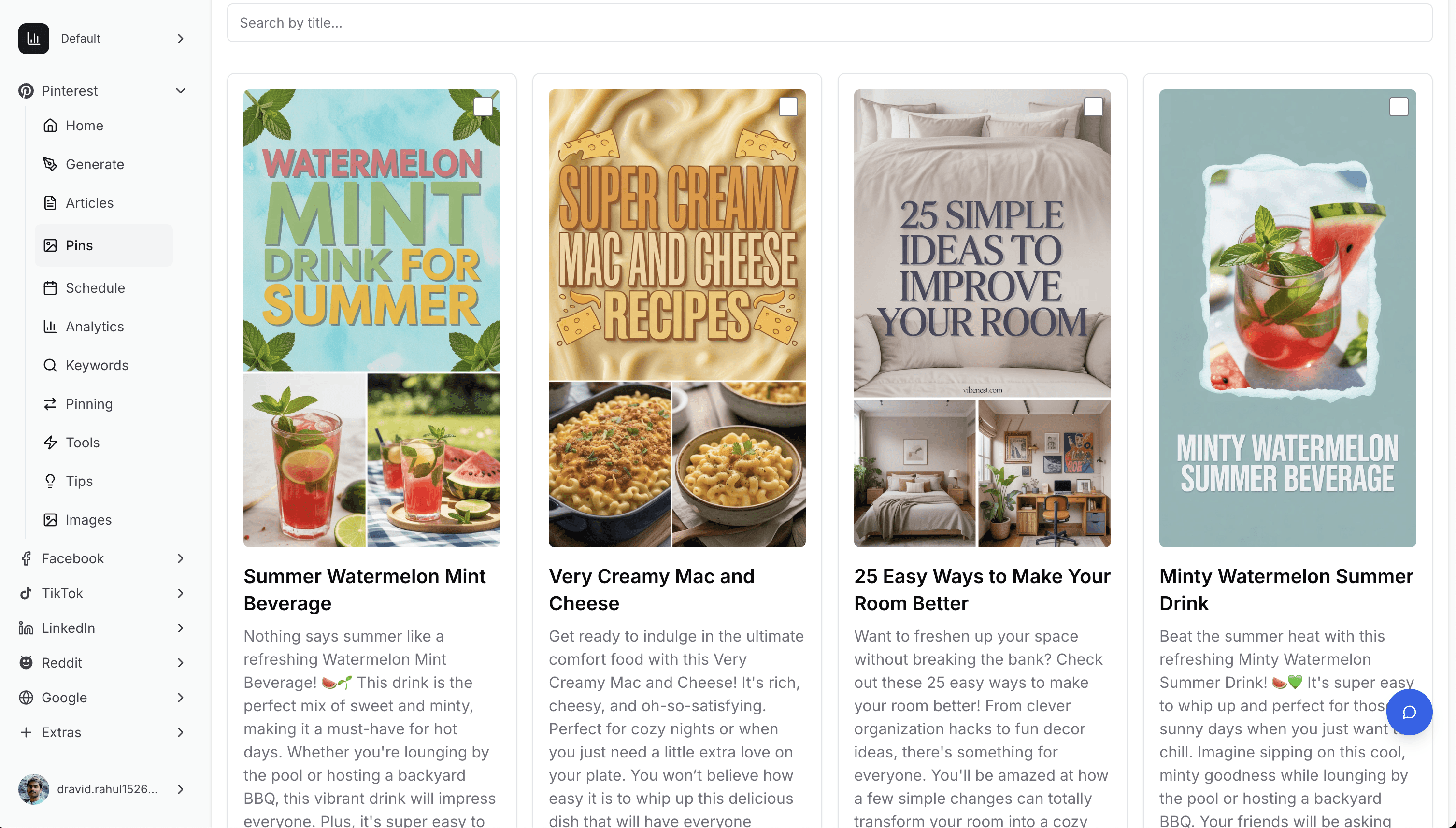
On a visual-first platform like Pinterest, you could turn a key statistic into a beautiful, shareable infographic. Say your podcast mentioned that multitasking can tank productivity by 40%. You could design a stunning, vertical Pin that visualizes that stat. This works incredibly well because people on Pinterest are actively searching for information and inspiration.
Even a forum like Reddit is fair game. Find a relevant subreddit (like r/productivity), and start a genuine discussion. A title like, "I used to believe these 3 productivity myths, but here's what changed my mind," followed by a summary and a question, can spark amazing conversation and build real authority.
To make this even easier, here's a quick cheat sheet for adapting your core content idea across the most popular platforms.
Content Repurposing Cheat Sheet
Platform | Repurposed Format | Key Tactic |
|---|---|---|
TikTok | Short-form video (15-60s) | Use a trending sound; focus on a single, high-impact tip or myth. |
Reel, Carousel, Story | Pull a 60-90s video clip, create a multi-slide graphic, or run a poll in Stories. | |
Text post or document | Share a professional insight, statistic, or quote to start a discussion. | |
Idea Pin or Infographic | Design a vertical, visually appealing graphic that solves a specific problem. | |
YouTube | Shorts & long-form video | Post the full podcast with a static image and create multiple Shorts from key moments. |
Text-based discussion post | Start a conversation in a relevant subreddit by sharing your experience and asking for others'. |
By thinking about repurposing from the very beginning, you create a system that allows you to show up consistently and provide value everywhere without burning out.
Analyzing Your Content to See What Works
https://www.youtube.com/embed/7n9hBmA-oCY
If you want to consistently create social media content that hits the mark, you have to stop guessing and start looking at the data. The creation part is just the beginning; the real growth comes from understanding how your content actually performs. This is all about building an analytics-driven feedback loop that tells you exactly what to create next.
It's easy to get fixated on vanity metrics like likes and follower counts. And while those numbers feel good, they don't paint the full picture. The true signs of success—the metrics that show your content is genuinely connecting—are things like shares, saves, and the sentiment in your comments. These actions mean your audience found your post so valuable they either tucked it away for later or passed it along to their own network.
Moving Beyond Surface-Level Metrics
To get a clear idea of what’s resonating, you need to dig a bit deeper. Start by focusing on the metrics that actually matter for your specific goals.
Building a community? Then you need to be looking at comment volume and quality. Are people having real conversations in your comments section? This is especially critical on a platform like Reddit, where deep engagement is the name of the game. You can use a dedicated tool to get free Reddit analytics for your subreddit and see which topics really get people talking.
Driving traffic? Your north star is click-through rate (CTR). Out of everyone who saw your post, how many actually clicked the link to your website or landing page?
Growing brand awareness? Here, you want to track shares and reach. How far is your content traveling beyond your own followers? A high share count is a powerful endorsement from your audience.
This data-first approach also shines a light on which formats are working best for your audience. For example, engagement numbers across platforms scream one thing: video. On Instagram, posts with video can pull in 49% more engagement than static images. And over on LinkedIn? Videos can generate five times more engagement than other types of posts. You can dig into more of these social media findings from OnlySocial to see just how much format choice matters.
Conducting a Simple Monthly Content Audit
You don't need a fancy, complicated dashboard to get started. Just set aside an hour each month for a quick content audit.
Fire up a spreadsheet and make two lists: your top three and bottom three performing posts from the last month, based on the key metrics you identified earlier.
Key Takeaway: Your worst-performing posts are just as valuable as your best ones. They teach you what not to do, saving you from wasting time on content that falls flat.
Once you have your lists, it's time to play detective. For each post, ask yourself why it performed the way it did.
For a top post, what was the secret sauce?
The Hook? Did that first sentence immediately stop the scroll?
The Format? Was it a carousel, a Reel, or maybe just a really well-written text post?
The Topic? Did you tap into a current trend or solve a burning problem for your audience?
Now, do the same for your duds. Was the topic too niche? Was the visual a bit bland? Did you forget a clear call-to-action? Be brutally honest with yourself.
These insights are pure gold. They become the starting point for your next brainstorming session, creating a powerful cycle of continuous improvement. This is how you move from just throwing content at the wall to see what sticks, to building a reliable engine that delivers better results every single time.
Got Questions? We've Got Answers
Stepping up your social media game always comes with a few questions. Here are some of the most common ones I hear from creators and marketers, along with some straight-to-the-point advice based on what actually works.
How Often Should I Really Be Posting?
This is the big one, isn't it? But the truth is, the magic number doesn't exist. It's all about quality and sustainability, not just hitting a daily quota. Pumping out seven rushed, generic posts a week will get you nowhere. Three thoughtful, high-value pieces will always win.
Start with a pace you can genuinely keep up with without burning out. From there, think platform-specifically. A single, well-crafted LinkedIn article each week might be your sweet spot. Over on Instagram, you might find that 3-4 Reels plus a handful of daily Stories is what moves the needle. The goal is to be a consistent, reliable presence for your audience, not a content machine on the verge of a breakdown.
Is AI-Generated Content Going to Kill My Engagement?
Only if you let it. AI is a fantastic tool, but it's not a substitute for your brain, your voice, or your strategy. Content only feels robotic when you just copy and paste what the AI spits out.
Think of AI as your creative partner. It's brilliant for breaking through writer's block, spinning up a dozen different hooks, or generating hashtag sets in seconds. But the final product? That needs your human touch—your stories, your opinions, your unique perspective. I've seen countless posts that blend AI efficiency with human creativity perform incredibly well. Why? Because they're both smart and authentic.
What Happens When I Run Out of Ideas?
We’ve all been there, staring at a blank screen. But this feeling isn't a sign of a creative failure; it's a sign that your idea-gathering system needs a tune-up. A solid content engine isn't built on random bursts of inspiration. It’s fueled by a steady stream of audience insights.
To keep that idea pipeline full, build these habits into your weekly workflow:
Be an active listener. Dive into your comments, DMs, and reviews. What are people asking? What are they struggling with? Your next great piece of content is probably hidden in a question someone just asked you.
Keep an eye on the competition. See what’s resonating for others in your space. The point isn't to copy them, but to use their successful posts as clues to what your shared audience is hungry for.
Ride the trend wave. Use tools like Google Trends or your platform's built-in trend reports to see what topics are about to pop.
By making research a system, you stop waiting for ideas to strike and start actively uncovering them. This simple shift ensures you always have a backlog of topics you know your audience wants.
When you take this approach, the blank calendar anxiety disappears. Your content becomes a direct answer to the conversations your community is already having.
Ready to stop the content grind and build a powerful, automated social media engine? NicheTrafficKit uses AI to handle everything from trend research and content creation to multi-platform scheduling. See how you can save hours every week and get started for free with NicheTrafficKit.
Article created using Outrank